1. Credit-linked subsidy
A major benefit is the 35% credit-linked capital subsidy, subject to the applicable maximum limit. This can reduce the entrepreneur's effective financial burden when setting up or upgrading a food processing unit.
Food processing · Subsidy · Ahmedabad
The PMFME Scheme (Pradhan Mantri Formalisation of Micro Food Processing Enterprises) is a government initiative designed to support small food processing businesses with financial assistance, training, branding, and business formalisation. It can help entrepreneurs upgrade their food processing units, improve product quality, and build a more sustainable business.
35% credit-linked subsidy
Up to ₹10 lakh per unit
Bank loan + 10% own share
Subsidy is credit-linked
Ahmedabad food MSMEs
Documents first, then apply
For entrepreneurs searching for PMFME Loan in Ahmedabad, understand eligibility, required documents, benefits, and the application process before starting registration. Also see how to apply for an MSME loan and CGTMSE application.
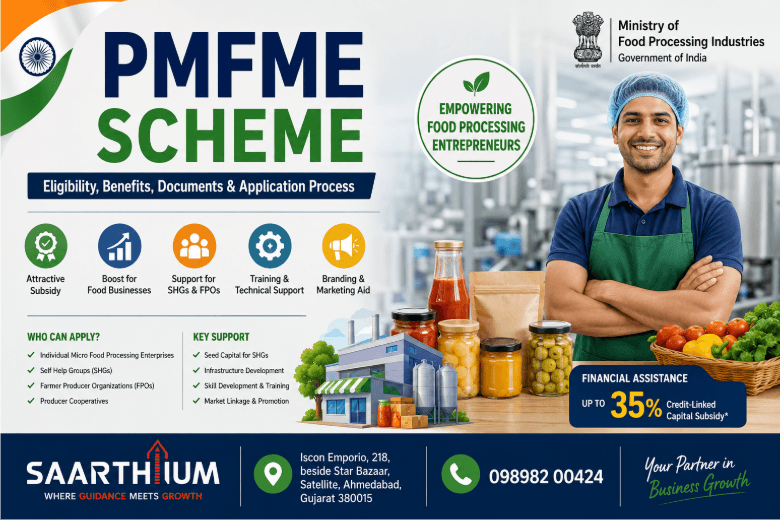
The PMFME Scheme supports micro food processing enterprises across India. The scheme focuses on helping existing businesses become more organised and competitive while also encouraging entrepreneurs to establish or expand food processing activities.
Eligible applicants may receive credit-linked capital subsidy of 35% of the eligible project cost, subject to a maximum subsidy of ₹10 lakh per individual unit. The beneficiary is generally required to contribute at least 10% of the project cost, with the remaining amount financed through a bank loan.
The scheme can be relevant for businesses involved in food processing, packaging, preservation, and value addition. Food licences such as FSSAI and Udyam registration are often part of a complete file.
Eligibility can depend on the nature of the business and the applicable scheme guidelines. Generally, the PMFME Scheme focuses on micro food processing enterprises.
Potential applicants may include:
Businesses should be involved in an eligible food processing activity. Applicants also need to meet the financial, documentation, and project requirements applicable to their category. Before applying, check the latest PMFME guidelines and confirm whether the proposed business activity and project qualify.
A major benefit is the 35% credit-linked capital subsidy, subject to the applicable maximum limit. This can reduce the entrepreneur's effective financial burden when setting up or upgrading a food processing unit.
Financial support can be used for eligible activities related to improving production, processing, packaging, and other infrastructure requirements.
Upgrading machinery, processing methods, and packaging can help businesses improve product quality and maintain better production standards.
The scheme encourages informal food processing businesses to become more organised and financially structured.
Eligible groups and enterprises may also benefit from support related to branding, marketing, and value-chain development, subject to scheme provisions.
The exact documents may vary depending on the applicant and project. Commonly required documents can include:
Keep clear and updated documents ready to avoid delays during verification. If GST applies to your unit, see GST registration.
The application process generally involves multiple stages. Entrepreneurs should prepare their business and financial information before beginning registration.
Identify the food processing activity, proposed investment, machinery requirements, working capital needs, and expected business income.
A properly prepared project report is important for explaining the business model, project cost, equipment requirements, expected revenue, and repayment capacity.
Applicants need to submit the required information through the applicable PMFME application process and upload the necessary documents.
The application and supporting documents are reviewed by the concerned authorities and other relevant agencies as part of the process.
After the relevant assessment, the loan application is processed through the concerned bank. The bank evaluates the project, financial position, repayment capacity, and other applicable requirements.
Once the loan is sanctioned and other conditions are completed, the entrepreneur can proceed with the approved project activities.
Entrepreneurs looking for PMFME loan registration in Ahmedabad should first understand their eligibility and prepare the required documents and project details. A complete application can make the process easier and reduce delays caused by missing information.
Food processing businesses in Ahmedabad and surrounding areas can explore the scheme for eligible business expansion, machinery upgrades, processing infrastructure, and related activities. Compare other routes such as PMEGP vs CGTMSE vs MUDRA if your project is not a food-processing unit.
A PMFME loan consultant in Ahmedabad can help applicants understand the application requirements, prepare project-related documents, organise financial information, and guide them through the registration and loan process.
Professional assistance can be particularly useful for first-time entrepreneurs who are unfamiliar with government schemes, project reports, bank documentation, and subsidy-linked financing.
Saarthium can assist entrepreneurs in understanding the PMFME process and preparing for the required documentation and application steps. Consultants cannot guarantee subsidy or loan approval; the bank and concerned authorities make the final decision.
The PMFME Scheme can be a useful opportunity for eligible micro food processing entrepreneurs who want to formalise, expand, or upgrade their businesses. Understanding eligibility, subsidy benefits, documents, project requirements, and the application process before registration can make the process more organised.
If you are planning PMFME loan registration in Ahmedabad, preparing accurate documents and a practical project report should be among the first steps.
35% credit-linked subsidy, documents, and the PMFME loan process for food processing MSMEs in Ahmedabad.
Eligibility, documents, and the real application path through a lender for collateral-light MSME credit.
CIBIL, GST vs bank mismatch, documents, and a fix-first checklist before you reapply.
Compare subsidy, credit guarantee, and MUDRA micro loans with a simple decision guide.
MSME classification, CGTMSE context, procurement, and delayed payments, without confusing registration with guaranteed loans.
What Udyam, CGTMSE, and Startup India actually mean for credit, and what banks still evaluate.
Learn about Section 80-IAC tax exemption and how to get zero tax on your business.
Complete guide to PMEGP loan scheme for MSMEs and startups.
Get seed funding up to ₹50 lakh through Startup India scheme.
Access collateral-free loans up to ₹2 crores for your business.
Have a question about funding, registration, or compliance? Send us a note and our team will reach out shortly.
Get weekly tips, funding opportunities, and compliance updates delivered to your inbox.
By subscribing, you agree to our Privacy Policy. Unsubscribe anytime.