Starting a business requires more than a good idea. Entrepreneurs need financial support, business planning, and the right resources to turn their ideas into successful companies. One of the most popular funding options for startups and growing businesses is Venture Capital (VC) Funding.
Venture capital funding helps startups raise money from investors in exchange for an ownership stake in their business. It provides financial support to businesses with high growth potential, particularly those developing innovative products, services, or technologies.
In India, venture capital is becoming an important source of funding for entrepreneurs. With the right guidance from professionals like Saarthium, businesses and fund promoters can better understand funding opportunities, regulatory requirements, and investment structures.
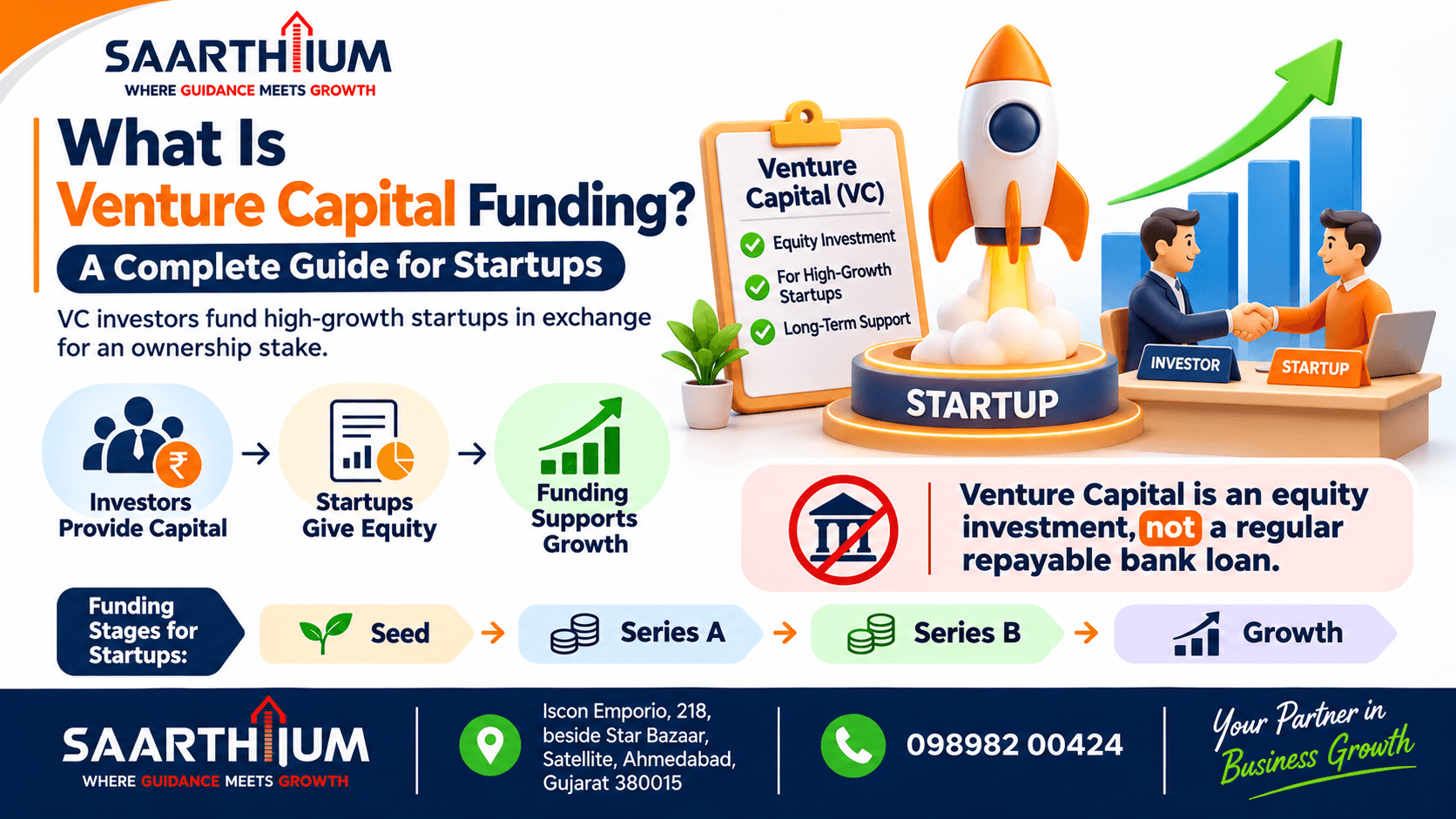
What Is Venture Capital Funding?
Venture capital funding is a type of private investment provided to startups and early-stage businesses that have strong growth potential. Venture capitalists invest money in exchange for equity or partial ownership of the company.
Unlike traditional business loans, venture capital funding generally does not require monthly loan repayments. Instead, investors earn returns when the company grows in value and provides an opportunity for an exit through acquisition, share sale, or public listing.
For example, a technology startup developing a new software product may need funds for product development, marketing, hiring, and business expansion. A venture capital investor can provide the required investment in exchange for an agreed ownership percentage.
How Does Venture Capital Funding Work?
The venture capital funding process involves several stages. Investors evaluate the business before deciding whether to invest.
The typical process includes:
- Business Evaluation: Investors review the startup's business model, market demand, revenue potential, competitors, and growth opportunities.
- Pitch Presentation: Entrepreneurs present their business idea, financial projections, target customers, and expansion plans through a business pitch deck.
- Due Diligence: Investors examine the company's financial records, legal documents, ownership structure, operations, and potential risks.
- Investment Agreement: Both parties discuss the investment amount, company valuation, equity percentage, and other terms before signing the agreement.
- Fund Release: Once the necessary agreements and formalities are completed, the investment is released according to the agreed terms.
- Business Growth: Investors may provide strategic guidance, industry connections, and business expertise to support the company's growth.
Different Stages of Venture Capital Funding
Startups can raise venture capital at different stages depending on their business development and financial requirements.
- Pre-Seed Funding: Early financial support for developing a business idea, conducting research, and creating an initial product.
- Seed Funding: Investment to validate the business model, develop products, and attract initial customers.
- Series A Funding: Capital for improving operations, increasing revenue, and developing a scalable business model.
- Series B Funding: Investment to expand market reach, strengthen operations, and increase business capacity.
- Series C and Later Funding: Funding for larger expansion plans, acquisitions, entering new markets, or preparing for an exit.
What Are the Benefits of Venture Capital Funding?
Venture capital offers several advantages to startups and entrepreneurs.
Access to Business Capital: Startups receive financial resources to develop products, hire employees, improve technology, and expand operations.
No Traditional Loan Repayments: Equity-based venture capital does not usually involve fixed monthly repayments like conventional business loans.
Business Mentorship: Experienced investors can guide entrepreneurs in business planning, financial management, and strategic decision-making.
Industry Connections: Venture capital investors may connect startups with potential customers, business partners, and industry experts.
Faster Business Expansion: With adequate funding and professional guidance, startups can explore new markets and grow their operations.
However, entrepreneurs should understand that raising venture capital involves sharing company ownership and accepting certain investor rights and responsibilities.
What Is Venture Capital Fund Registration in India?
Venture capital fund registration is a regulatory process for establishing an eligible investment fund that collects money from investors and invests it in businesses according to a defined investment strategy.
In India, venture capital funds generally operate under Category I Alternative Investment Funds (AIFs), regulated by the Securities and Exchange Board of India (SEBI).
The registration process involves selecting an appropriate fund structure, preparing legal documentation, defining the investment strategy, meeting eligibility requirements, and submitting the application through the prescribed SEBI process.
Entrepreneurs and fund promoters planning Venture Capital Fund Registration In Ahmedabad should understand the applicable SEBI regulations before starting the process.
Professional assistance can help applicants prepare documentation, understand compliance requirements, and avoid common application mistakes.
Why Do You Need Professional Venture Capital Fund Consultants?
Establishing an investment fund involves legal, financial, and regulatory responsibilities. Professional guidance can make the process more organised and easier to understand.
Experienced Venture Capital Fund Consultants In Ahmedabad can assist fund promoters with:
- Understanding the SEBI registration framework.
- Selecting a suitable fund structure and category.
- Preparing registration documents and applications.
- Understanding investment policies and fund requirements.
- Coordinating regulatory compliance and documentation.
- Providing guidance on fund formation and operational planning.
Working with experienced professionals helps fund promoters make informed decisions throughout the registration process.
How Saarthium Can Help With Venture Capital Fund Requirements
Setting up a venture capital fund requires proper planning, regulatory understanding, and accurate documentation. Saarthium can be considered as a professional support option for businesses and entrepreneurs exploring fund-related registration and consultancy requirements.
Whether you are planning to establish a Venture Captial Fund In Ahmedabad or exploring investment opportunities for a growing business, understanding the applicable process is an important first step.
With the right professional guidance, fund promoters can better understand registration requirements, documentation, and regulatory responsibilities before proceeding.
Conclusion
Venture capital funding plays an important role in helping startups develop innovative products, expand their operations, and achieve long-term business growth. It provides access to investment, industry connections, and valuable business expertise.
Whether you are an entrepreneur looking for startup investment or a fund promoter planning to establish an investment fund, understanding the funding structure and regulatory framework is essential.
For professional guidance on venture capital fund requirements, Saarthium can help you explore the relevant registration and consultancy process in Ahmedabad.